Tyvixom:
How Timeframes Shape Market Involvement
Sign up now
 Tyvixom


Sign up now
Market activity changes depending on how long someone plans to stay engaged. Short duration involvement often focuses on quick price changes and fast adjustments. Longer duration participation tends to build over time, where decisions follow wider direction and gradual position development.
The same price movement can be interpreted in different ways across timeframes. A small shift may trigger action for short term participants, while others may treat it as a minor fluctuation within a larger structure. This creates varied responses, where behaviour depends more on perspective than on the move itself.
Looking at participation through duration adds clarity. Some individuals engage frequently and respond to smaller developments. Others remain involved for longer periods, focusing on how conditions evolve over time. The timeframe chosen shapes both activity and decision approach.

Tyvixom connects individuals with educational firms where market participation is explored through comparison instead of quick surface views. Rather than grouping all activity together, learning environments often separate short duration and long duration involvement to show how each one shapes behaviour differently.

Within Tyvixom, this approach may suit individuals who want to understand how participation shifts when the holding period changes. It can be useful for those who observe that short duration actions and extended positioning often move along different paths.

Through Tyvixom, individuals are introduced to educational firms where participation is examined across varying timeframes instead of being treated as one continuous flow. Many initially see the market as one unified picture, yet short duration and extended duration involvement often respond to separate forces. This separation helps highlight how timing, structure, and perception influence decisions across different stages of market activity and evolving conditions over time.

Market participation often shifts based on how long individuals intend to remain involved, not just on price movement alone. Within Tyvixom, analysing short and extended timeframes helps highlight why brief activity may appear dominant for a short period, while longer involvement often guides the broader direction over time.

Looking at positions one by one can make overall exposure seem balanced when it is not. Different assets may appear unrelated, yet if they tend to move together, total risk can become heavier than it seems. Reviewing correlation helps reveal whether diversification is real or only apparent. Before making decisions, checking how often positions align in movement can support steadier control and more careful research.
Decision clarity often improves when positions are compared side by side instead of being viewed in isolation. A portfolio may appear stable during quiet phases, yet that balance can shift when assets begin moving in the same direction.
Looking at each position separately can give a false sense of balance. Weak areas may remain hidden within the overall structure. Correlation brings these links into view by showing how positions act together across different conditions, including pressure phases, steady periods, and uneven movement.
Tyvixom connects individuals with educational firms where asset relationships are explored through direct comparison instead of isolated review. Rather than assuming balance based on labels or categories, this approach focuses on how positions move in relation to each other. This helps highlight whether exposure is spread or becoming concentrated when multiple holdings react in a similar way during pressure.
Correlation does not stay constant across all conditions. Assets that appear independent during stable phases may begin to follow similar paths when conditions tighten. Shifts in participation and broader activity can influence whether correlation reduces exposure or increases it.
Risk becomes clearer when relationships are checked repeatedly instead of being treated as fixed. Comparing how assets behave across different phases allows individuals to notice when overlap starts increasing and adjust before it grows further.
A portfolio may include different asset types or regions, yet still carry similar exposure if those positions move together. Surface level variety can hide underlying connections, making correlation an important factor in identifying whether balance is genuine.
The way correlation is viewed often depends on the goal behind the portfolio. Lower alignment may matter more for those aiming to reduce exposure, while others may accept closer movement patterns over longer durations. Timeframes also influence how these relationships affect overall behaviour.
Returns carry value beyond the moment they appear. What happens next plays a key role. When gains stay within a portfolio, they increase the base that supports future movement. Over extended periods, this can create a clear gap between portfolios that retain gains and those that withdraw them early.
Viewing progress across longer durations highlights this effect. Growth does not come only from rising assets. It also develops when earlier gains remain active and continue adding to later outcomes.
Reassessment remains important because reinvestment does not suit every goal. Some portfolios focus on building over time, while others require regular access to funds. Objectives can shift, and the approach may need to adjust with them.
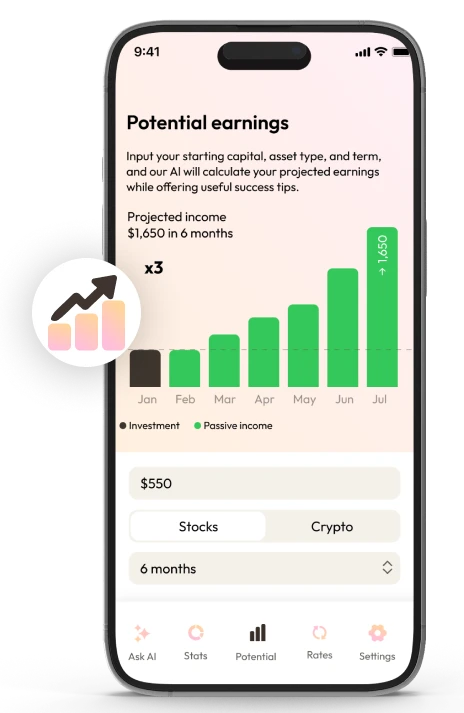
Long duration portfolio progress can shift based on how gains are handled after they appear. When returns remain within the portfolio, they add to the amount that can continue working in future periods.
This turns growth into a connected process where each stage builds on the last. Over time, this can create a larger gap than expected early on.

A portfolio expands not only through deposits or price changes. It also grows when past gains stay in place and become part of the working capital. This larger base then influences future movement. Even smaller retained gains can have a stronger effect later as growth builds on an increasing foundation.
The impact of reinvestment often becomes clearer over extended timeframes. In shorter periods, the difference may appear limited. Across longer spans, the effect grows as returns continue adding to one another and remain active for more cycles.
Withdrawing returns can change how a portfolio develops, even if performance continues. Once gains are taken out, they no longer contribute to future movement. This shifts the path of growth, although withdrawals may still align with certain needs.
Decisions around reinvestment often depend on the purpose of the portfolio. Growth focused approaches may keep returns invested, while income focused approaches may require periodic withdrawals. As goals change, the approach to handling gains may also shift.
Reinvestment can shape portfolio progress in ways that may not be clear at the start. Gains do not only matter when they are received. Their impact also depends on whether they stay within the portfolio or are taken out. When returns remain invested, they add to the base that supports future expansion.
Tyvixom connects individuals with educational firms where long term portfolio behaviour is explored through structured comparison instead of quick judgment. Discussions often look at how retained gains influence growth pace, how early reinvestment decisions can affect later stages, and how outcomes shift when returns continue contributing over time.
The effect of reinvestment can vary across different phases. In the early stages, changes may appear small because the added gains are limited. As the portfolio grows, the same process can carry more influence, since each new return builds on a stronger and expanding base.

Long term planning may seem steady at the start because rising costs often build slowly instead of appearing suddenly. A financial target can feel appropriate in the beginning, yet over time the same amount may no longer support the same level of spending.
Tyvixom connects individuals with educational firms where financial planning is explored through structured comparison. These discussions often focus on how future expenses can shift as prices increase over extended periods.
As evaluation continues, a clearer view of long term planning begins to take shape. Comparing current expenses with future cost pressure helps reveal how gradual price changes can adjust the direction of a plan. This shifts focus from fixed numbers to how purchasing strength evolves over time.

A financial plan may appear stable in the beginning but lose balance over time if rising costs are not considered. Short term goals may face limited impact, while long term goals can feel greater pressure as costs build gradually. Planning becomes clearer when time horizon and cost changes are viewed together.
Tyvixom connects individuals with educational firms where long range planning is explored through structured comparison. These discussions often examine how cost increases affect different timelines, spending needs, and categories instead of treating all goals the same.

Rising costs often move in small steps, which makes their effect easy to overlook early on. A target may seem practical when first set, yet the value behind that number can weaken over time.
What supports housing, healthcare, travel, or daily needs today may fall short later. Long term planning works better when it considers how cost changes can reshape what targets need to deliver.
A plan can appear steady simply because the number stays the same. Yet stability on paper does not reflect real conditions. The key question is whether the target still aligns with future expenses. Cost increases can quietly reduce its effectiveness without any clear early signal.
Each long term goal responds differently to rising expenses. Planning for retirement, education, housing, or healthcare may involve varying levels of cost increase. Some areas may rise slowly, while others may see sharper changes over time.
The effect of rising costs becomes stronger as time extends. In shorter periods, the difference may appear small. Over many years, even moderate increases can create a noticeable gap between planned amounts and actual needs.
Long term plans benefit from regular updates. Costs shift, income patterns change, and priorities evolve. A target set earlier may not reflect current conditions, even if it once seemed balanced.
Clear goals do more than organise planning. They help keep strategy choices aligned with real intent. When the objective is well understood, it becomes easier to check if a strategy matches the time horizon, how capital will be used, and how much flexibility is required.
Before taking major financial steps, take time to research carefully and connect with a financial professional for a broader view.

A strategy may appear effective on its own yet still fail to serve the intended goal. An approach can seem appealing at first, but later reveal a mismatch with time horizon, income needs, or risk comfort. This usually happens when focus stays on the method instead of the reason behind choosing it.
Vague goals often result in strategies that feel right initially but weaken over time. A short duration aim may be paired with an approach that requires patience. A stability need may be matched with a growth focused method. Without clear direction, choices can reflect preference rather than purpose.
Better decisions come from testing strategy against a clear objective. A stronger process considers what the plan is meant to achieve, when the approach may stop fitting, and how it performs under different conditions. This type of review builds stronger alignment rather than weakening the strategy.
| 🤖 Registration Fee | Zero cost to register |
| 💰 Administrative Fees | Fee-free service |
| 📋 Enrollment Ease | Simple, quick setup |
| 📊 Study Focus | Insights into Digital Currencies, Forex, and Investment Funds |
| 🌎 Country Availability | Available in nearly every country except the US |